



E-commerce is the centre of the digital fields we command. For e-commerce to be run successfully and sustainably, however, it is essential that it is embedded seamlessly in a range of other competencies. That begins with web development, where robust, user-friendly and scalable platforms have to be created that meet both the needs of end users and the technical requirements.
Data security plays a central role as well. In e-commerce especially, protecting customer data and sensitive payment information is indispensable. Without a strong foundation in IT security, customer trust is at risk and with it commercial success.
Beyond that, e-commerce platforms have to be combined with effective, flexible database systems in order to manage large volumes of product, customer and transaction data efficiently. Expertise in data analysis and optimisation is essential here, to draw valuable insight from that data which can be used to improve customer relationships and sales strategies.
Another important field is the integration of payment systems and logistics solutions. Without these processes running smoothly, customers quickly lose interest and companies risk missing revenue potential. This is also where the ability to implement APIs and interfaces to third parties, such as payment providers and delivery services, reliably comes into play.
Finally, performance optimisation is decisive: load speed and availability substantially influence the shopping experience. Command of modern cloud technologies and the ability to make systems highly scalable and resilient are therefore essential foundations for successful e-commerce operation.
Taken as a whole, e-commerce is a complex interplay of many digital disciplines. Only through deep expertise across these varied areas can we ensure that the central requirements of e-commerce are met and continuously improved.


A professional e-commerce application has to be able to access real-time data from the ERP in order to keep stock, prices and availability current at all times, and to enable automated processes such as invoicing and shipping. Without such a connection, data inconsistencies arise that lead to incorrect orders, customer dissatisfaction and increased manual effort.
To ensure a smooth exchange of data there are different types of connection, used according to requirements:
SOAP (Simple Object Access Protocol) offers a robust, standardised and transaction-safe solution, particularly useful in environments with high security requirements and complex business processes.
REST (Representational State Transfer), by contrast, is a lighter, more flexible solution, preferred for modern e-commerce systems because of its fast implementation and scalability.
For less critical use cases, or where real-time communication is not necessary, a file-based connection can be used, in which data is transferred and processed as files such as CSV, XML or JSON.
The choice of method depends on the complexity of the system and on business requirements, but a connection to the ERP is essential in order to synchronise real-time data such as stock levels and prices and to make automated processes efficient. Depending on a company's specific requirements (transaction volume, security needs, system complexity, for example) the right connection method will vary, but integration into the ERP system remains essential to a smooth and efficient flow of business.
As certified SAP integrators we have the experience needed to support your company with the best possible connection for your use case, whichever ERP solution you use.








Our company develops bespoke software solutions for existing frameworks or as standalone systems, and we place great value on professional software development by experienced software developers.
The expertise of our developers ensures that solutions are not only functional but also cost-efficient, maintainable and scalable. Through well-founded knowledge and experience we can implement complex requirements precisely and with future-proof technologies, which minimises both development and maintenance costs over the long term. The focus throughout is on creating a structured, well-documented codebase that can easily be adapted to changing business requirements and so offers high scalability.
Another key element of success is our project management, which secures the efficiency of the entire development process. We work with agile, pragmatic management that provides enough structure to secure the project's success while avoiding processes bogged down by excessive bureaucracy and over-planning. That approach lets us drive projects forward quickly and purposefully, without causing unnecessary delays, while keeping the client's needs and budget in view at all times.


"Content is King" holds particularly true in e-commerce, since high-quality content takes on the sales work on the website in favour of higher conversion, while also contributing to discoverability on the web.
For that reason we developed a powerful content bridge via API between the widely used CMS TYPO3 and the Magento e-commerce framework. This solution enables seamless integration, with content managed centrally in the CMS and transferred automatically into the online shop, which simplifies the workflow considerably and increases efficiency.
The need for such an integration is obvious: in modern e-commerce, companies have to be able to manage content flexibly and dynamically in order to respond quickly to market changes and customer needs.
A missing integration between CMS and e-commerce platform can become seriously problematic. When both systems are run in isolation from one another, not only does data redundancy arise, but maintaining and updating content takes considerably more effort. Changes have to be made in two separate systems, which can lead to inconsistencies, errors and inefficient working. That slows the company's responsiveness and also increases the risk of errors that can affect user experience and branding. Beyond this, an integrated solution improves the maintainability and scalability of the system, because changes and extensions can be made centrally through the CMS without burdening the e-commerce side unnecessarily. That reduces technical effort and also keeps the shop current and SEO-optimised.
This solution is of course not limited to TYPO3 and Magento: other CMS platforms such as WordPress or Drupal can be integrated just as easily. By using modern API standards we ensure the solution is flexible and future-proof. That gives companies the opportunity to align their content and e-commerce strategies optimally, without the duplicated work or the risks that isolated systems create.








High-traffic e-commerce platforms need, above all, the ability to scale horizontally and to deploy with zero downtime, in order to meet the demands of a dynamic market.
Horizontal scaling makes it possible to add further servers or instances to handle rising traffic and a growing number of customer requests, without impairing the performance of the existing infrastructure. This matters particularly for platforms that expect peak loads during sales campaigns or holidays, in order to guarantee consistently high performance and availability.
Zero-downtime deployments are equally decisive, since they make it possible to introduce updates and new features without interrupting the platform's operation. In an e-commerce environment, any downtime can mean lost revenue and a poor user experience. A system that guarantees continuous availability not only improves user satisfaction but also minimises business interruption and the costs that come with it.
To meet these requirements, modern DevOps tools and methods are essential. Terraform, Ansible, Git CI/CD pipelines, Docker and cloud hosting all play a central role:
Terraform is an infrastructure-as-code tool that makes it possible to define and provision the entire infrastructure of an e-commerce platform automatically. With Terraform, developers and IT teams can create consistent, reproducible infrastructure that scales without difficulty. Expressing infrastructure as code encourages better traceability and versioning, and also allows easy adaptation to changing requirements and a fast response to new load peaks.
Ansible is a configuration management tool used to automate the configuration and administration of servers. With Ansible, complex deployments can be automated, which reduces susceptibility to error and increases efficiency. Ansible ensures that all servers and services are configured consistently, which matters especially during horizontal scaling, so that new instances are integrated into the system seamlessly.
Docker provides a containerised environment that allows applications to run consistently and in isolation. Using Docker, e-commerce applications can run in lightweight containers that simplify both development and deployment. Docker makes dependency management easier and ensures applications behave consistently across different environments, which is an advantage particularly when scaling and rolling out new versions.
Cloud hosting complements these technologies by providing flexible, scalable and highly available resources. Cloud hosting services make it possible to adapt infrastructure dynamically to current demand, which is essential for horizontal scaling. They also offer integrated functions for backup, recovery and monitoring that contribute to the availability and stability of the platform. Many cloud providers additionally support functions for zero-downtime deployments, enabling uninterrupted updates of applications.
Taken together, Terraform, Ansible, Git CI/CD pipelines, Docker and cloud hosting contribute substantially to running high-traffic e-commerce platforms efficiently, reliably and flexibly. They provide the tools needed to automate, scale and continuously improve the infrastructure, which is essential to the success and stability of modern e-commerce systems.
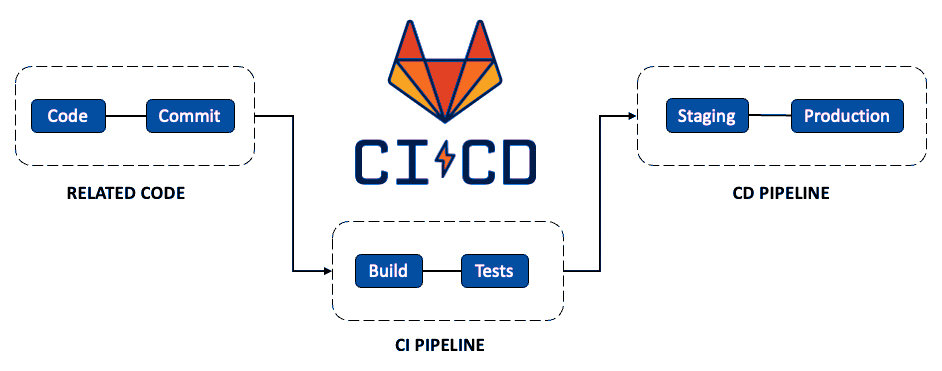
Git CI/CD pipelines (continuous integration / continuous deployment) enable automated, continuous delivery of software updates. CI/CD pipelines ensure that new code changes are tested, integrated and deployed regularly without manual intervention. That encourages faster and more reliable delivery of new features, and also minimises the risk of errors that manual deployments could introduce. A well-configured CI/CD pipeline additionally supports the implementation of zero-downtime deployments by ensuring new versions are rolled out safely and seamlessly.
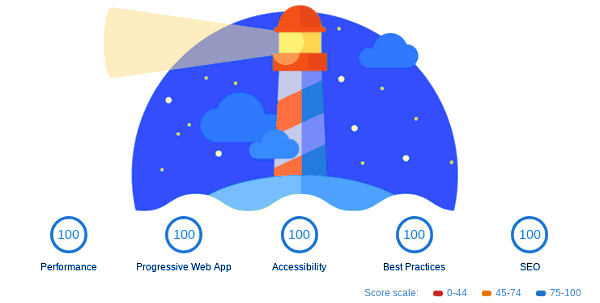
SEO (search engine optimisation) and website optimisation are essential components of a successful online presence. They play a decisive role in how well your website is placed in search results and how effectively it speaks to users. Here are some central reasons why regular SEO and website optimisation matter:
Improved visibility in search engines:
Good SEO practice ensures your website is placed better in the results of search engines such as Google. Through targeted optimisation of content, meta tags and the technical aspects of your website, you increase the likelihood that your page ranks higher for relevant searches. Better visibility leads to more organic traffic and increases the chance of winning new visitors and potential customers.
Better user experience:
Website optimisation improves not only visibility but the user experience as well. An optimised design, fast load times and user-friendly navigation ensure visitors feel comfortable on your website and find what they are looking for easily. That encourages positive interaction and can help visitors stay longer and become customers.
Higher conversion rates:
Through targeted SEO and website optimisation you can increase conversion rates considerably. By ensuring your website offers relevant, engaging content and a clear call to action (CTA), you increase the likelihood that visitors take the actions you want, such as purchases or enquiries. An optimised website delivers a smooth, engaging user experience that raises the conversion rate.
Long-term competitiveness:
Regular SEO and website optimisation are decisive if you are to hold your own against other companies. The online market is dynamic and constantly changing. Through continuous optimisation you stay current with best practice and trends, which helps you stand out from the competition and remain successful over the long term.
Better website performance:
SEO optimisation goes hand in hand with the technical optimisation of your website. That includes improving load speed, optimising for mobile devices and ensuring your website is secure and well structured. A well-performing website matters not only to search engines but to users, who expect a fast and frictionless experience.
Protecting brand reputation:
An optimised website appears professional and trustworthy. Through good SEO practice and continuous website optimisation you avoid negative user experiences and strengthen customers' trust in your brand. A strong online presence and positive user experiences contribute to a positive perception of the brand.
Measurability and adjustment:
SEO and website optimisation give you the ability to measure the success of your efforts precisely. With analytics tools you can monitor traffic, user behaviour and conversion rates. That data helps you make well-founded decisions and adjust your strategies continuously in order to achieve even better results.
In summary, SEO and website optimisation are essential to online success. They improve not only visibility and user experience but also contribute to higher conversion rates and long-term competitiveness. Regular adjustment and optimisation are therefore indispensable if your website is to stay current and operate successfully in the digital environment.


Performance audits are decisive for the success of your website and offer a thorough analysis of load times and general performance. Here are some central reasons why regular performance audits matter greatly for your website:
Better user experience:
A fast website is of decisive importance to the user experience. Long load times can cause frustration and lead visitors to leave the page early. Studies show that most users abandon a website that takes longer than three seconds to load. Through regular performance audits you can ensure your website stays fast and responsive, which increases visitor satisfaction and raises the likelihood that they stay longer and return.
Higher conversion rates:
Slow load times have a direct effect on your conversion rates. If a page takes too long to load, it can deter potential customers from completing purchases or other important actions. A well-optimised website ensures customers find what they are looking for quickly and that checkout runs smoothly. That can lead to higher sales and better business results.
Better search engine placement:
Search engines such as Google take a website's load speed into account when assessing and ranking it in search results. A fast website has a better chance of ranking higher, which leads to more organic traffic. A performance audit helps identify technical problems that could be affecting your search engine placement, and allows you to resolve them.
Lower running costs:
An inefficient website can cause unnecessary running costs, such as higher server costs or additional resources spent managing load problems. By optimising the website you can save resources and reduce the cost of hosting and maintenance.
Long-term scalability:
A performance audit helps identify potential bottlenecks and weak points that could hold back your website's growth. By resolving these problems early you ensure your website stays stable and performant even as traffic and data volumes rise.
Protecting brand reputation:
A slow or faulty website can damage customers' trust in your brand. A performance audit ensures your website appears professional and reliable, which contributes to a positive perception of the brand.
In summary, performance audits play a fundamental role in securing the performance and efficiency of your website. They help not only to recognise and resolve technical problems early, but also contribute to improving the user experience, raising conversion rates and optimising search engine placement. Regular audits are therefore an indispensable part of successful web management.